
AR-Eye: A Custom, Low-Cost Eye Tracker for Mental Fatigue Detection with Pattern-Based Machine Learning on Augmented Reality Headsets
Alexios Stavroulakis
Type: Master Thesis · Supervisor: Katerina Mania
Research Domains: Pupilometry, Eye Tracking, Physiology, Hardware, Augmented Reality, 3D Printing
Abstract
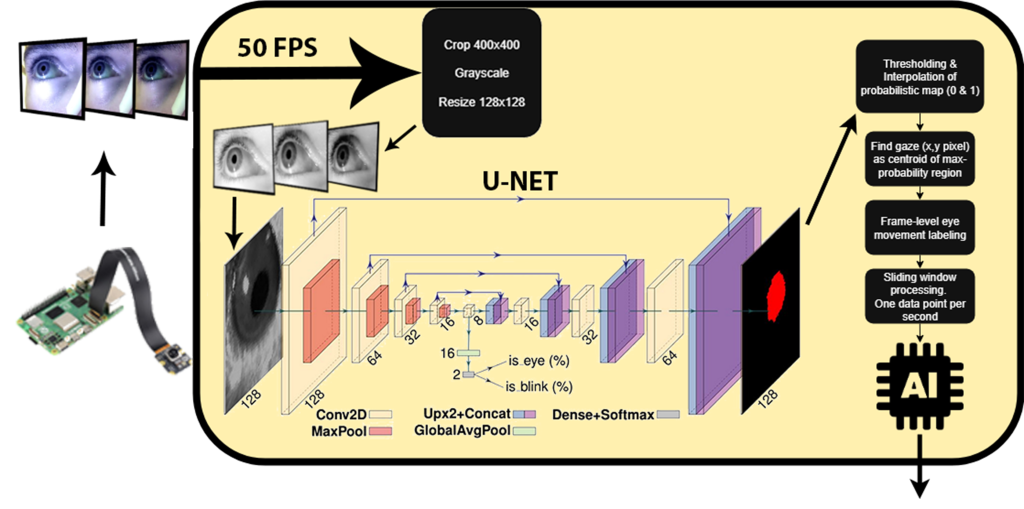
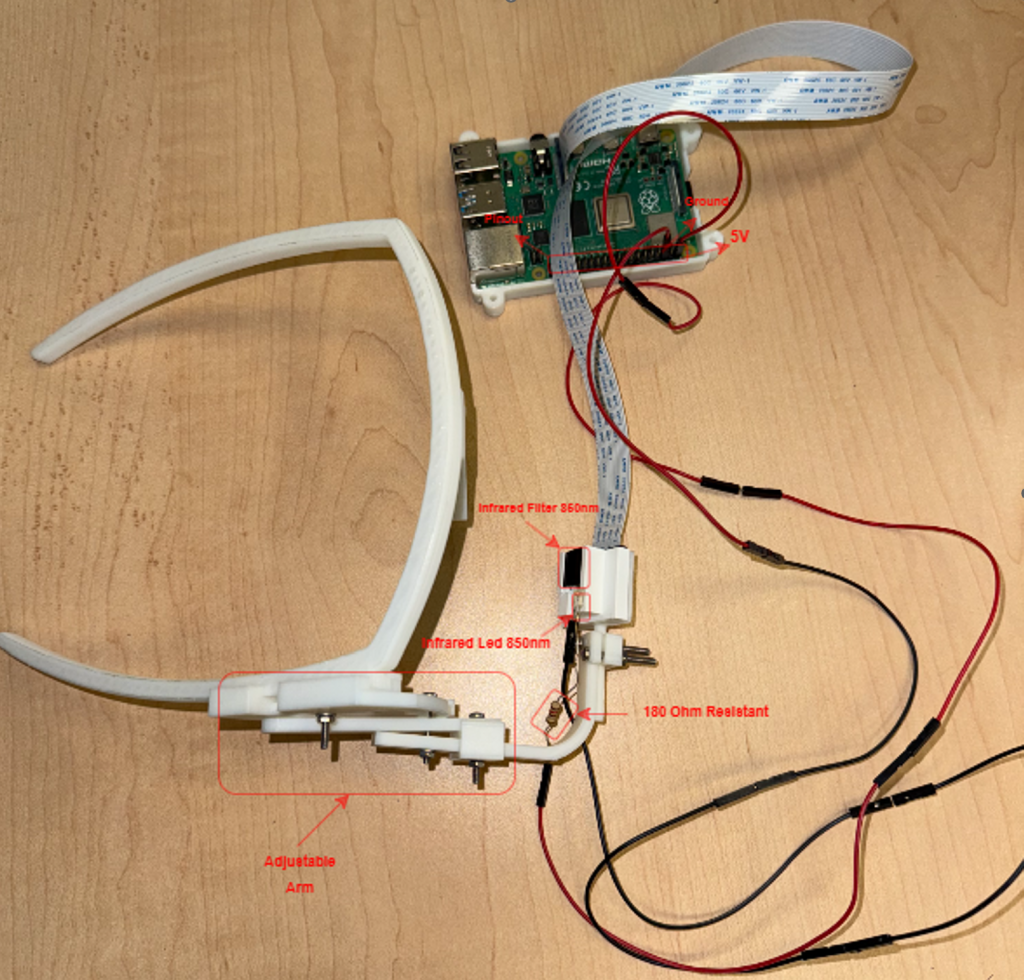
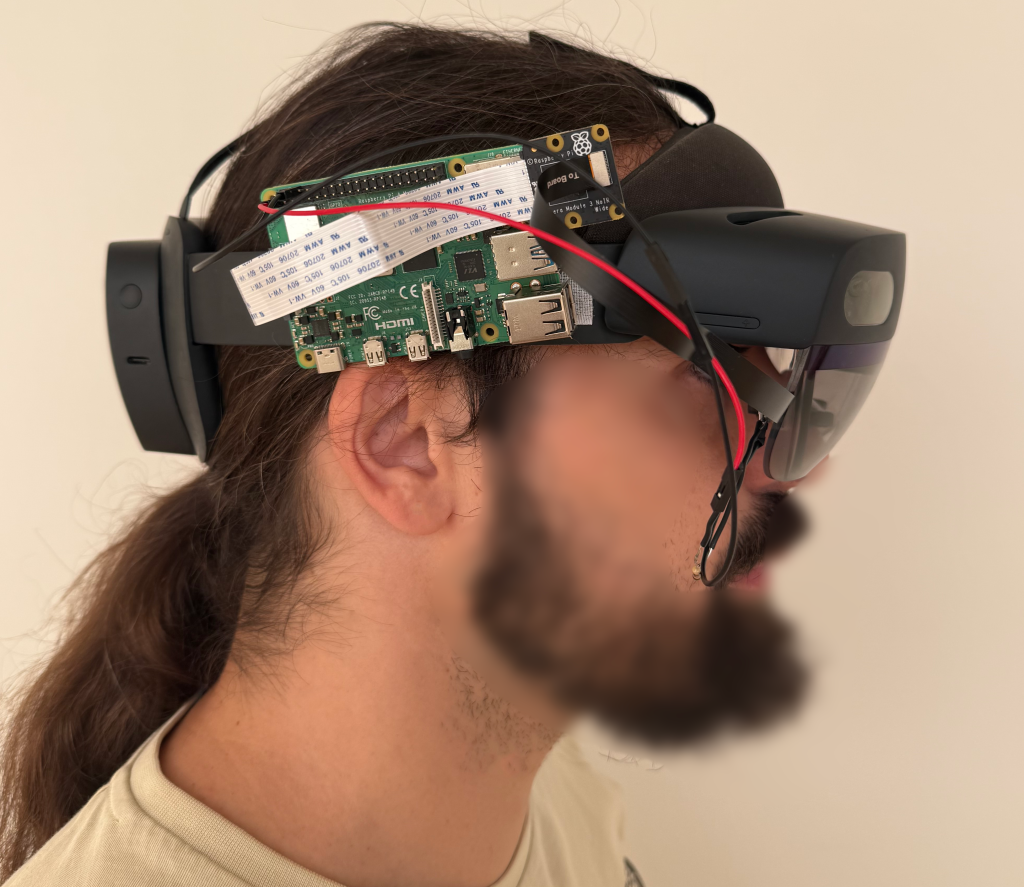
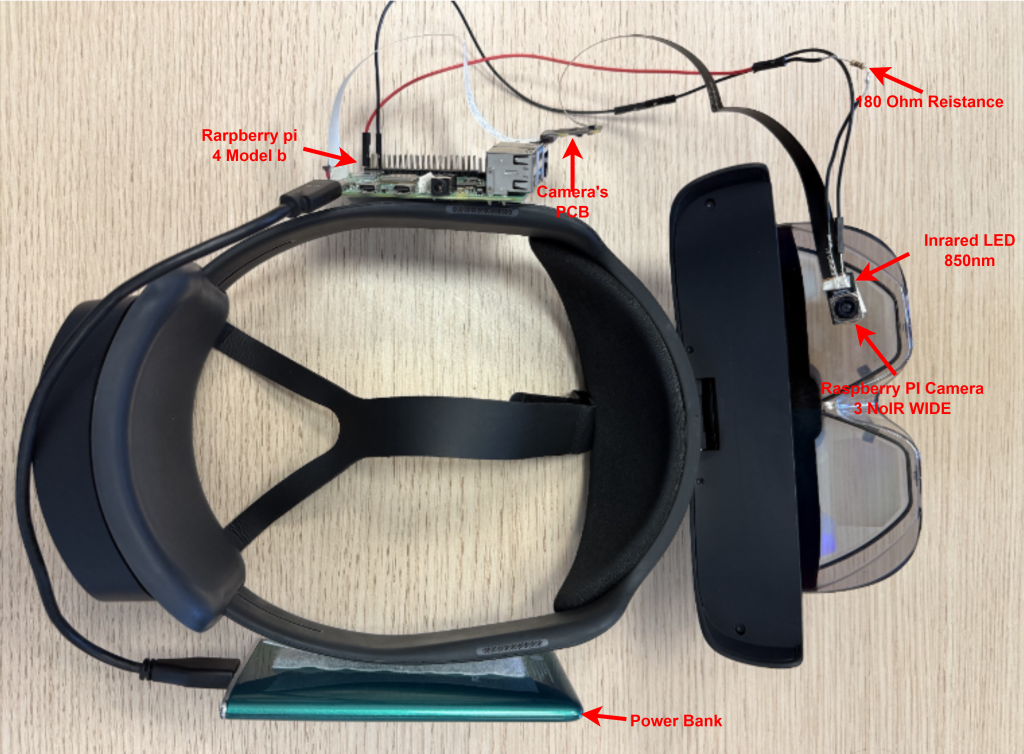
We present a low-cost, custom-built eye tracking system designed as a modular add-on for augmented reality (AR) headsets that either lack native eye tracking capabilities or provide insufficient ocular data for cognitive monitoring. Our system leverages infrared-enabled cameras and machine learning techniques to extract oculometric features—pupil diameter, blink dynamics, and saccadic velocity—in real time, enabling reliable detection of user mental fatigue. Unlike commercial high-cost solutions or restricted APIs of built-in AR trackers, the proposed device provides direct access to raw eye metrics under diverse conditions. We implement an unsupervised clustering approach combined with supervised classifiers to estimate fatigue levels on a per-second basis, integrating both self-reports and objective eye tracking data. Results are streamed into the AR environment, where individual and team-wide fatigue states are visualized through intuitive holographic overlays. This collaborative monitoring framework enables users to track both their own and others’ cognitive states, supporting adaptive interventions in shared AR tasks. The system demonstrates the feasibility of affordable, portable, and extensible ocular-based fatigue detection for enhancing performance, safety, and well-being in group-oriented AR applications.
Publications
- Stavroulakis, A., Roumeliotis, M., Safranoglou, I., Ramiotis, G., & Mania, K. (2025). AR-Eye: A Custom, Low-Cost Eye Tracker for Mental Fatigue Detection with Pattern-Based Machine Learning on Augmented Reality Headsets. In ICAT-EGVE 2025 – International Conference on Artificial Reality and Telexistence and Eurographics Symposium on Virtual Environments. The Eurographics Association. LINK
Supplementary Materials